Newsletter
One email. Every week. Pure signal.
The week in quality engineering — skip an issue, and you'll wish you hadn't.
20K+ engineers already reading
Quality at Scale: How to Build Quality Across Growing Engineering Teams

Oct 13, 2026
Building quality at scale means quality stays high as teams, services and releases grow. It rests on five building blocks: a culture where every engineer owns the quality of their changes, clear shared standards, layered automation that follows the test pyramid, fast and reliable quality gates in CI/CD, and observability that detects production problems before users report them.

Quality that works for one team of eight rarely survives a jump to eight teams of eight. The QA engineer who used to test every release becomes a bottleneck, the end-to-end suite grows to two hours and fails at random, and every team defines “done” a little differently. Adding testers does not fix it; it just makes the queue longer.
Building quality at scale means changing where quality comes from: from a final checkpoint to a property of how every team works. This guide covers the five building blocks that make that shift work, and the order to put them in.
What does quality at scale mean?
Quality at scale is the ability to keep defects, incidents and user-facing problems low while the number of teams, services and releases grows. The test is simple: when you double the number of deploys, quality should stay flat or improve, not fall.
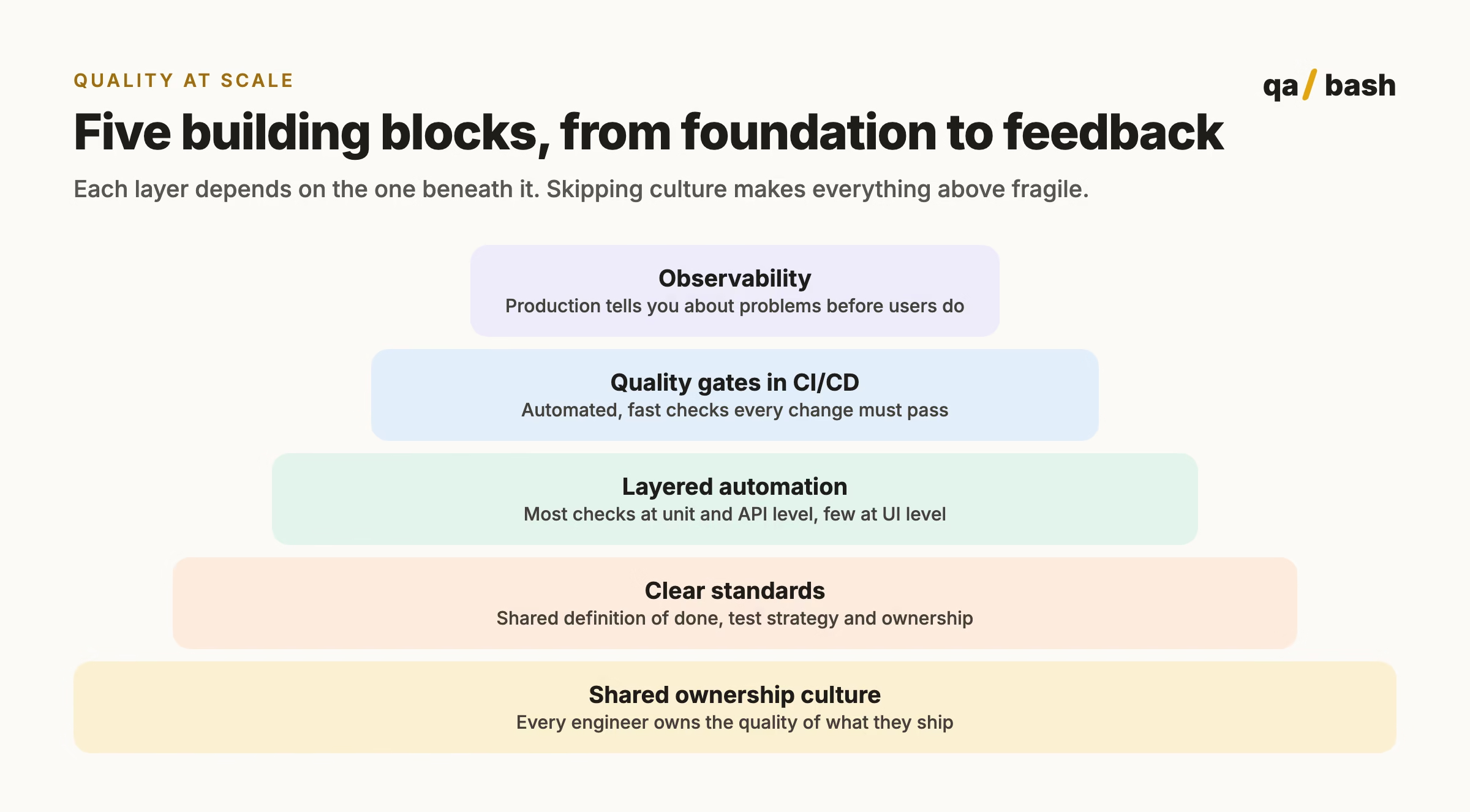
1. Shared ownership: from gatekeeper to enabler
At scale, QA cannot be the team that “signs off” releases. There are too many of them. Instead, the developers who write a change are responsible for testing it, and quality specialists build the tools, frameworks and practices that make that easy.
| Gatekeeper model | Enabler model | |
|---|---|---|
| Who tests a change | QA, after development | The team that built it, during development |
| QA’s main output | Test runs and sign-offs | Frameworks, coaching, strategy, tooling |
| Feedback time | Days | Minutes to hours |
| Scales with teams | No, QA becomes the queue | Yes, every team tests itself |
| Typical friction | “Throw it over the wall” | Upfront investment in tooling and skills |
2. Clear, shared standards
- Definition of done that includes tests at the right level, not just “QA approved”.
- A written test strategy: what is tested at unit, contract, API and UI level, and who owns each.
- Code review rules for tests: tests are reviewed like production code.
- Ownership maps: every service and every test suite has a named owning team.
3. Layered, maintainable automation
The test pyramid still holds at scale, and it matters more because slow, flaky suites multiply with every team that depends on them. Push checks down to the fastest layer that can catch the problem.
| Layer | Share of tests | Runs in | Owner |
|---|---|---|---|
| Unit | Most | Seconds, on every commit | Developers |
| Contract and API | Many | Minutes, on every pull request | Developers and SDETs |
| UI end to end | Few, critical journeys only | Minutes, before release | SDETs with product teams |
| Exploratory | Targeted sessions | Per feature or release | QA and product |
Shared frameworks, test data services and environments are platform work. Treat them as products with owners, documentation and support, or each team will build its own and you will maintain twelve.
4. Quality gates in CI/CD
Quality gates are automated checks that a change must pass before it moves on. Good gates are fast, reliable and explain themselves when they fail.
- Unit and API tests pass, with no newly flaky tests.
- Contract tests pass for every consumer and provider.
- No new critical static analysis or dependency vulnerabilities.
- Critical-journey UI tests pass before release.
- Performance budgets hold for key endpoints.
Keep the pull request gate under about ten minutes. Slow gates get bypassed, and a bypassed gate is worse than none because everyone assumes it ran.
5. Observability and production quality
No test suite catches everything. At scale, the goal is to detect production problems faster than users report them and recover quickly.
- Structured logs, metrics and traces for every service.
- Alerts on symptoms users feel (errors, latency, failed checkouts), not just CPU.
- Feature flags and gradual rollouts so a bad change reaches few users.
- Synthetic checks for critical journeys running continuously in production.
- Every escaped defect becomes a new automated test at the lowest possible layer.
A rollout plan for engineering leaders
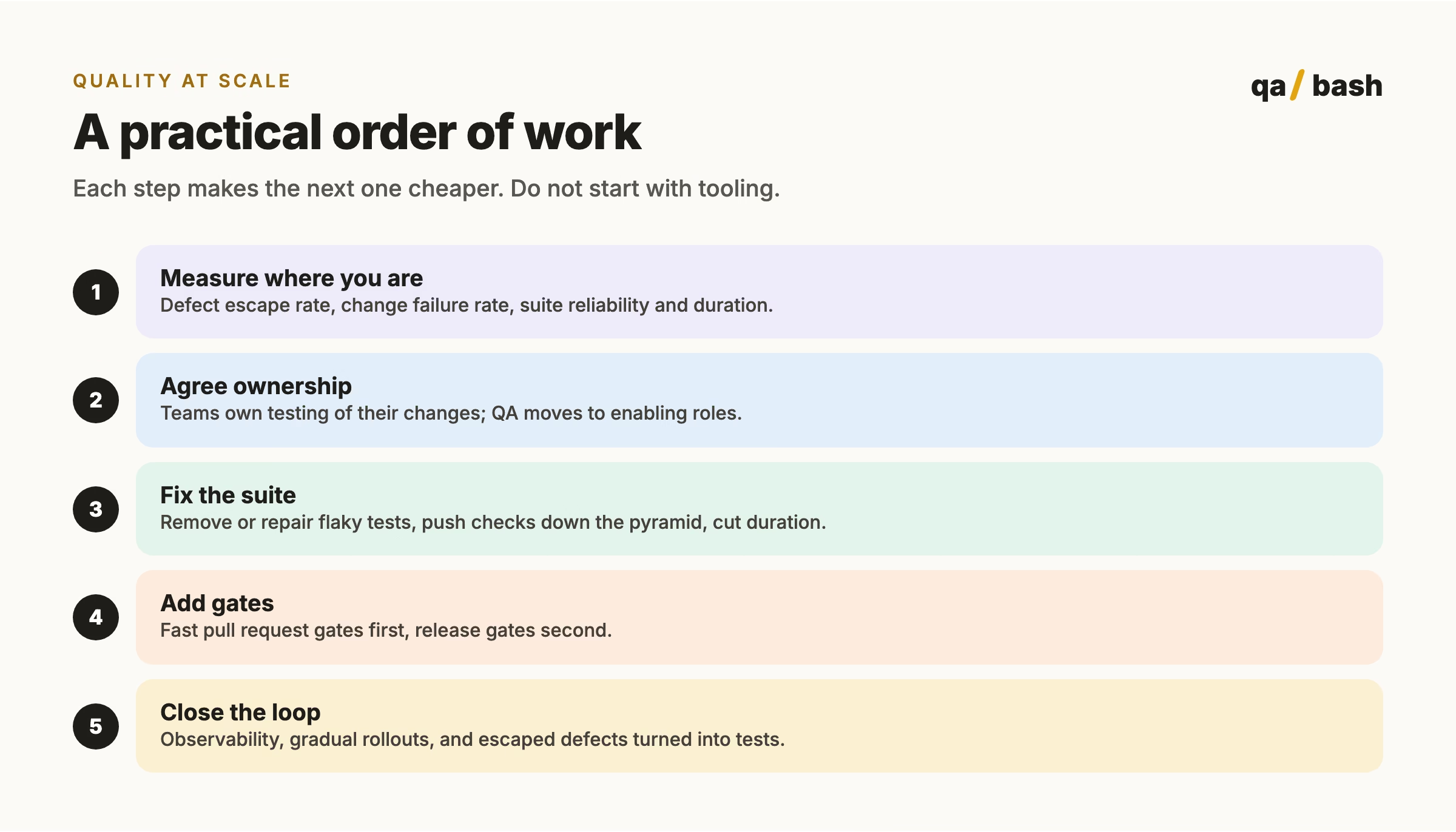
Choosing what to measure is the first step; our guide to quality metrics that matter lists the ones worth tracking. For the career path that leads to owning this kind of work, see the SDET roadmap.
Rate this article
8.9/10 average · 30 ratings
Discussion
Start the conversation
What do you think about this article? Share your experience, ask a question, or add to the discussion.

He’s a builder of communities, a collector of questions, and a relentless challenger of assumptions. While others chase answers, he chases better questions. While others talk about the future of testing, he quietly helps create it.
Frequently asked questions.
What is quality at scale?
It is keeping defects, incidents and user-facing problems low while the number of teams, services and releases grows, ideally with quality staying flat or improving as deploys increase.
How do you scale QA across multiple teams?
Move testing into each team so developers own the quality of their changes, and shift QA specialists into enabling roles that build frameworks, standards and tooling.
Related articles
Quality Metrics That Matter: What Engineering Teams Should Track
This guide explains the quality metrics that matter, such as defect escape rate, change failure rate and…
3 min
Writing Test Cases for Automation: How to Make Every Case Automation-Ready
This guide explains how to write test cases for automation that are atomic, independent and deterministic,…
4 min