Beyond Test Automation: Exploring How Agentic AI Can Transform QA Engineering

Nov 1, 2026
Quick answer
Agentic AI in QA engineering means using AI agents that work toward a testing goal instead of replaying a fixed script. An agent can read a requirement, pick positive and negative scenarios, choose browser or API tools (often through MCP), run the tests, analyze unexpected results and prepare a report for a QA engineer to review.
Why I started exploring Agentic AI in testing
From AI assistants to AI agents
At a glance: automation script vs AI assistant vs AI agent
| Aspect | Traditional automation script | AI assistant | AI agent |
|---|---|---|---|
| Starting point | Predefined test steps | A prompt from the tester | A testing goal, such as validating login |
| What it does | Executes a fixed sequence | Responds with information or suggestions | Plans steps, uses tools, evaluates outputs and decides what to do next |
| Tool use | Tools are hard-coded in the script | Suggests tools but does not run them | Selects browser, API or other tools, often through MCP |
| Unexpected results | The test fails and a human investigates | Explains them only when asked | Analyzes the response and collects evidence |
| Output | Pass or fail results | A text answer | A structured test report for review |
| Human role | Writes and maintains scripts and locators | Asks questions and applies the suggestions | Defines the goal and reviews the agent’s decisions |
Where MCP fits into the picture
Practical challenges I noticed
Challenges and practical safeguards
| Challenge | What can go wrong | Practical safeguard |
|---|---|---|
| Incorrect decisions | The agent misreads a requirement or picks the wrong testing approach | Give it clear acceptance criteria and review its test plan before execution |
| Unreliable execution | Tool failures, changing UI elements or inconsistent behaviour interrupt the workflow | Run actions through stable frameworks such as Playwright and API clients, and log every step |
| Validation | A reported pass does not prove the application behaves correctly | Keep evidence such as screenshots and responses, and confirm key results independently |
| Security | The agent reaches data, credentials or environments it should not | Use dedicated test accounts, least-privilege access and separate test environments |
| Human oversight | Critical or release-related calls are left to the agent | Keep release decisions and critical validations with an engineer |
My approach going forward
Who does what in a combined workflow
| Activity | Automation framework (Playwright, API tests) | AI agent | QA engineer |
|---|---|---|---|
| Test planning | None | Suggests positive and negative scenarios from requirements | Reviews and approves the scenarios |
| Execution | Runs the tests reliably and repeatably | Chooses which tools and tests to run | Monitors the runs |
| Failure analysis | Reports what failed | Analyzes unexpected responses and groups failures | Confirms real defects |
| Reporting | Produces raw results | Prepares a structured report with evidence | Reviews the report |
| Release decision | None | None | Owns the decision |
Final thoughts
Related reading on QA Bash
- AI Agents Explained: Architecture, Tool Use, and QA Implications
- Components of AI Agents: A Tester's Guide to Perception, Memory, Planning and Action
- We Already Had APIs. So Why Did We Need MCP?
- Playwright MCP + GitHub Copilot: Building AI-Assisted Test Automation
- AI Testing Agents Won't Replace Testers. They Will Expose Weak Strategies
Go deeper · QA Bash kit
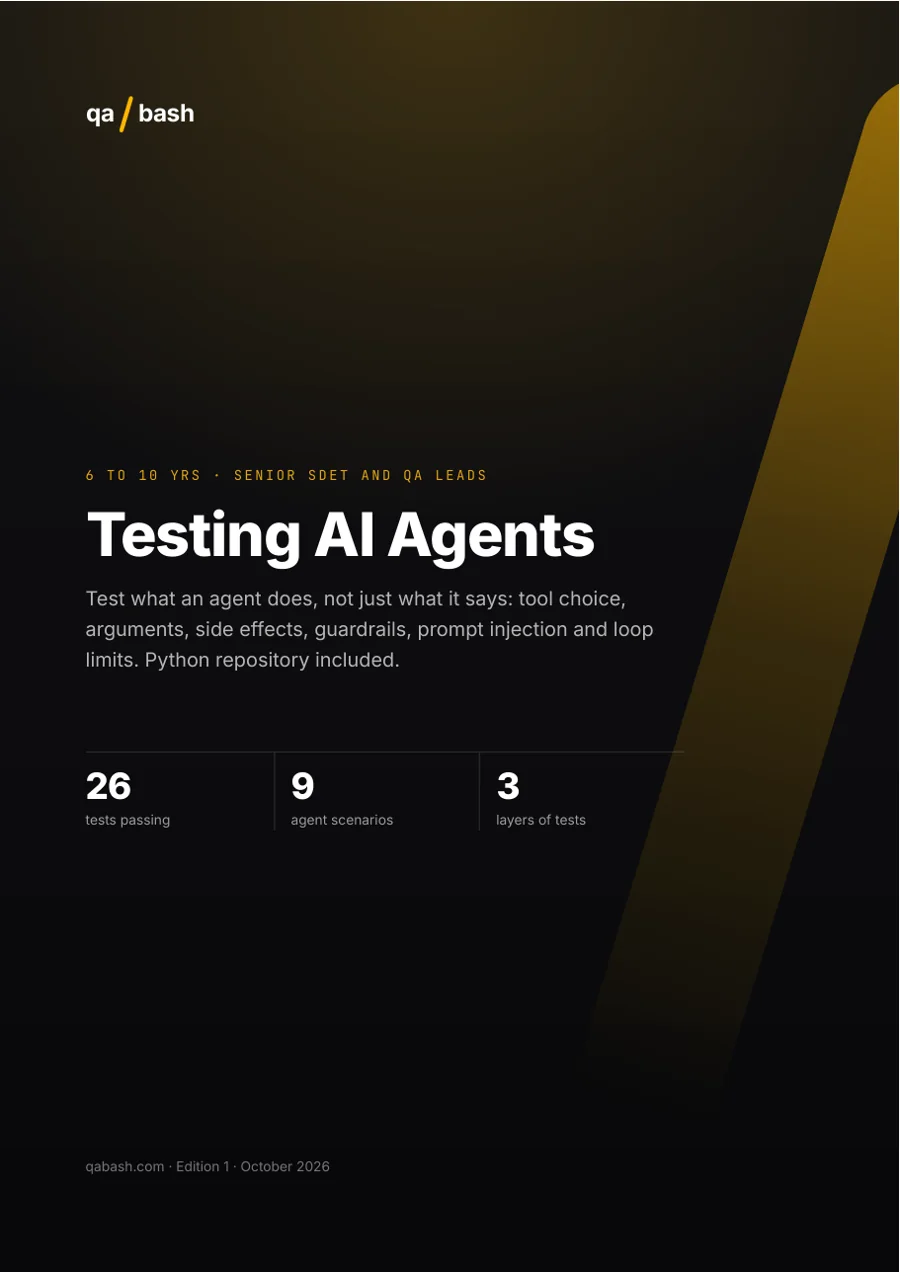
Testing AI Agents
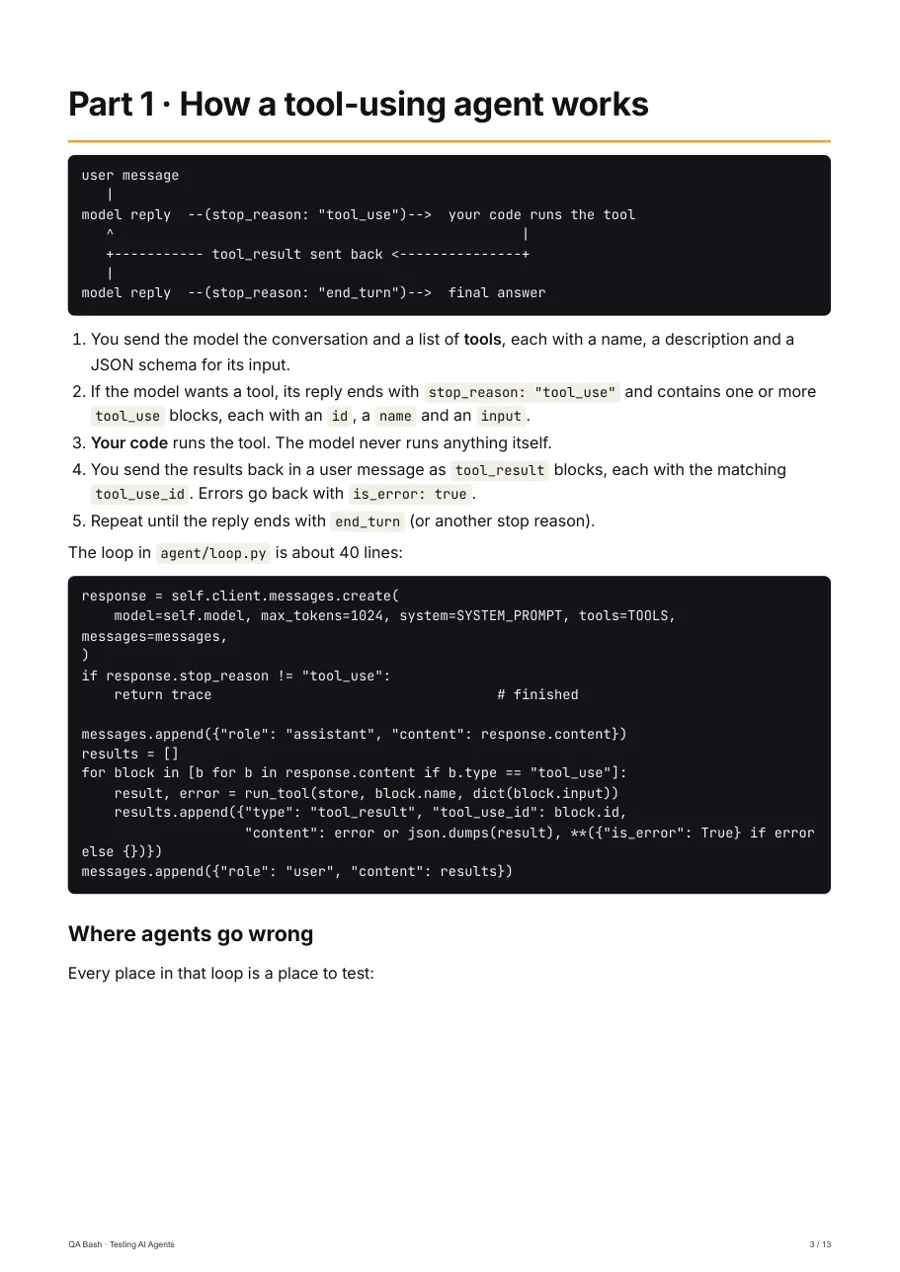
Test what an AI agent does: tool calls, side effects, guardrails, prompt injection and loop limits.
6–10 yrs · 26 passing tests
₹799₹999
Rate this article
8.1/10 average · 26 ratings
Discussion
Be the first to weigh in
Your question or experience helps the next tester who reads this. Sign in and earn +25 XP for every approved comment or reply.
Written by

Team Lead at AAHA Solutions
Frequently asked questions.
What is agentic AI in software testing?
Agentic AI in software testing uses AI agents that work toward a testing goal rather than following a fixed script. The agent can understand a requirement, decide which scenarios and tools to use, execute the tests, analyze the results and prepare a report for human review.
Keep reading