Testing Mistakes That Slip Into Mature QA Practices

Ishan Dev ShuklCommunity Council
Jul 26, 2024

In the thrilling world of software development, testing is the unsung hero ensuring that everything runs smoothly. Yet, even the best of us can stumble into a few traps. Fear not! We’re here to spice up your testing game by highlighting seven common mistakes and showing you how to dodge them like a pro.
1. Inadequate Test Planning
The Mistake:
Diving into testing without a solid plan is like setting sail without a map. You might end up lost, frustrated, and nowhere near your destination.
How to Avoid It:
Craft a rock-solid test plan. Outline your goals, resources, timelines, and key areas to focus on. Think of it as your treasure map, guiding you to testing gold. A well-laid plan ensures you hit all the critical spots and keeps you on track.
2. Insufficient Test Coverage
The Mistake:
Concentrating too much on some areas while ignoring others can leave you with gaping holes in your testing. This can let pesky bugs slip through, causing chaos later.
How to Avoid It:
Adopt a risk-based testing approach to ensure comprehensive coverage. Use test management tools to track what’s been tested and what’s still lurking in the shadows. Regularly review and update your test cases to cover all bases.
3. Ignoring Automation Opportunities
The Mistake:
Relying solely on manual testing is like trying to dig a tunnel with a spoon. It’s laborious and prone to mistakes.
How to Avoid It:
Automate, automate, automate! Identify repetitive and high-risk test cases and turn them into automated scripts. Invest in top-notch automation tools and frameworks, and keep those scripts up-to-date. This way, you can dig that tunnel with a high-powered drill.
4. Poor Communication with Development Teams
The Mistake:
Working in silos with minimal communication between testers and developers can lead to misaligned efforts and missed defects. It’s like playing a game of telephone with disastrous results.
How to Avoid It:
Break down those walls and foster collaboration. Use agile methodologies like Scrum or Kanban to keep everyone in the loop. Regularly sync up to discuss issues, share insights, and align on objectives. Communication is key!
5. Overlooking User Experience (UX) Testing
The Mistake:
Focusing only on functional testing while ignoring user experience can result in an app that works but feels like a maze.
How to Avoid It:
Make UX testing a priority. Step into your users’ shoes and navigate the application. Conduct usability tests to gather feedback on the interface and overall experience. Smooth out any rough edges to ensure the app is not just functional but delightful to use.
6. Neglecting Performance Testing
The Mistake:
Skipping performance testing can turn your sleek application into a sluggish beast under load, frustrating users and causing crashes.
How to Avoid It:
Incorporate performance testing into your strategy. Use tools to simulate various loads and measure the app’s response times and stability. Identify and tackle performance bottlenecks early to ensure your app can handle anything thrown at it.
7. Failing to Learn from Past Mistakes
The Mistake:
Repeating the same errors due to a lack of reflection can doom your efforts to a cycle of frustration and failure.
How to Avoid It:
Conduct retrospectives after each testing cycle. Identify what went well and what didn’t, and document these lessons. Share insights with the team and implement improvements to avoid falling into the same traps. Continuous learning is the secret sauce to success.
Conclusion
Dodging these common testing pitfalls requires a strategic and proactive approach. With meticulous planning, embracing automation, fostering open communication, and constantly learning from past experiences, you can elevate your testing game to legendary status. Remember, effective testing is about more than finding defects—it’s about delivering an exceptional user experience.
Stay sharp, stay savvy, and above all, stay committed to testing excellence!
Interview questions
Beginner
Why is test planning important?
It sets scope, approach and priorities so testing is organised and focused.
What is insufficient test coverage?
Leaving important areas, paths or scenarios untested.
Why is relying only on manual testing a mistake?
Repetitive regression checks become slow, costly and error-prone.
Intermediate
Why is skipping negative testing risky?
Real users enter invalid data, and error handling is where many defects hide.
How does poor communication cause testing mistakes?
Testers miss changes and context, so tests check the wrong behaviour.
Why is ignoring non-functional testing a problem?
Performance, security and usability failures can hurt users as much as functional bugs.
Advanced
How do mature teams still slip into these mistakes?
Deadlines, habit and over-trust in existing suites; periodic reviews catch the drift.
How would you audit a team’s testing practice?
Review escaped defects, coverage against risk, test suite health and how testing is planned.
What’s the cost of finding defects late?
More rework, delayed releases and user-facing failures.

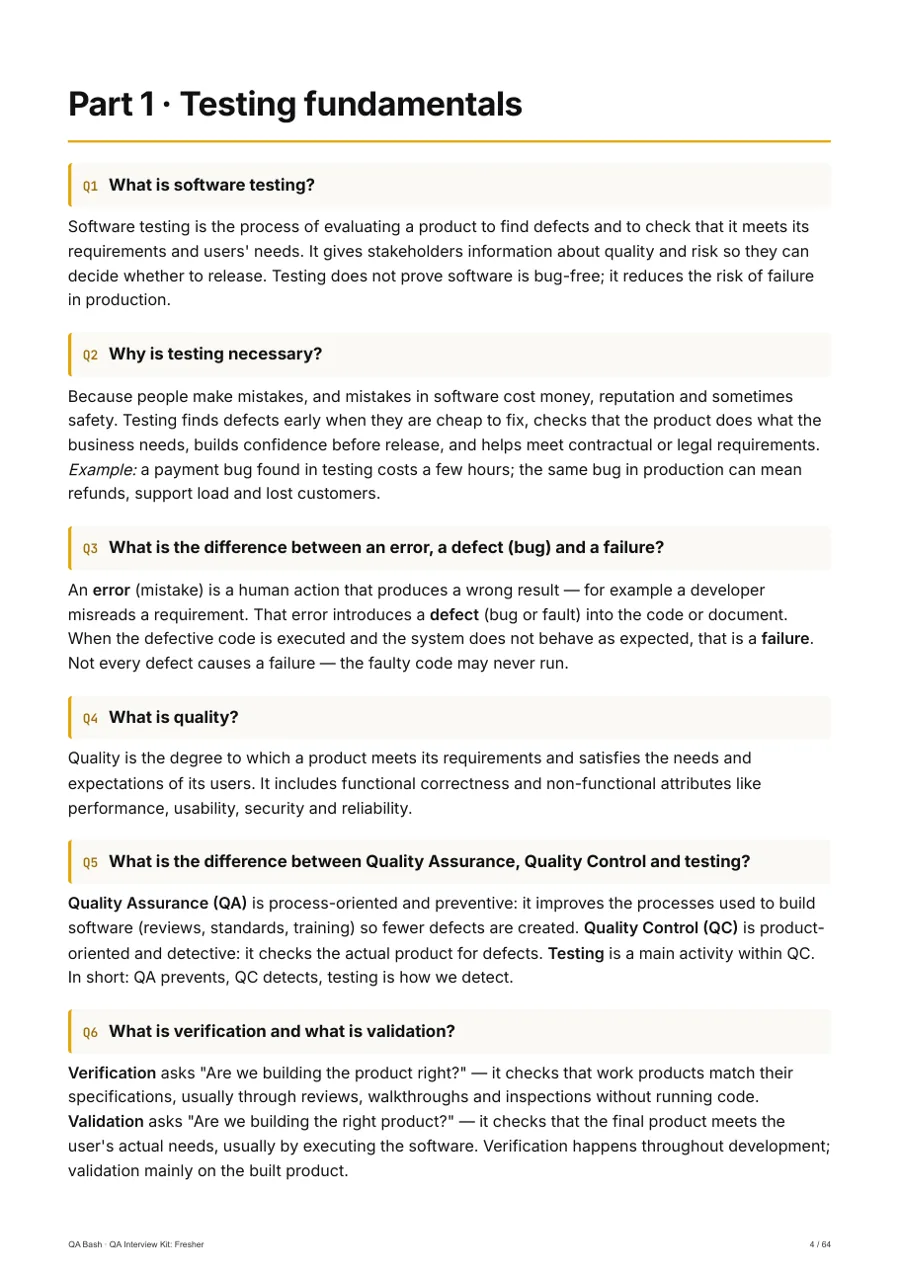
Go deeper · QA Bash kit
QA Interview Kit: Fresher
Walk into your first QA interview prepared, not guessing.
0–1 yrs · 300 interview Q&A
₹299₹374
Rate this article
7.2/10 average · 27 ratings
Discussion
Be the first to weigh in
Your question or experience helps the next tester who reads this. Sign in and earn +25 XP for every approved comment or reply.
Written by

Testing EnthusiastGurugram, India
With 15+ years in test automation, Ironman specializes in building scalable automation frameworks, AI-driven testing strategies, and modern quality engineering practices. He writes about automation tools, testing architecture, and the future of QA. His mission is simple: help testers evolve into engineers who build quality into every system.
Keep reading